Moonshot
 Higgsfield
 Orgn
 42dot
 Robocore

Who Is Behind the Degrowth Narrative, and Have Politicians Fallen for It?
After the midterms, some officials want to pause advanced AI and ban recursive self-improvement. The fear echoes the old case against nuclear power, and it could push the next wave of data centers out of the United States.

After the midterm elections, a set of officials began talking about artificial intelligence the way an earlier generation talked about nuclear power. The demand is to slow the technology, fence it in, or ban the next step. Congresswoman Yassamin Ansari said the top of the Democratic agenda on day one should be a pause on advanced AI development, regulation of what she called an out-of-control industry, and a ban on artificial superintelligence. Congressman Greg Casar posted two words, "Ban RSI," aimed at recursive self-improvement, the process in which AI systems help build the next and more capable systems. The posts make the same demand, and they show a mindset that treats further growth in this technology as something to stop.
What is behind the push to stop this growth is a desire for control. Some politicians are drawn to a ban because it lets them look as if they have handled the danger, while the thing they want to ban is still undefined. Recursive self-improvement and artificial general intelligence are named as if Congress could prohibit them by title. The officials making the demand have not explained either term well enough to say which research would have to stop. A prohibition that vague would be difficult to police. If China developed a model that could improve itself, American companies could adopt it without a public announcement, since refusing the more capable system would leave them behind. Superintelligence is described as something close to a Chernobyl made of software. That disaster has not happened, and the story about it is already shaping what officials say they want to do.
That story has a precedent. In the 1970s and 1980s, opposition to nuclear plants grew out of real safety worries and then spread well past any single design. Chernobyl became the picture people reached for whenever a reactor was proposed. A technology that can be engineered, regulated, and placed with care was discussed as if every plant were one accident away from being intolerable. Many plants were never built. Countries that stopped building lived with the power system they already had, which often meant more coal and gas than a finished nuclear fleet would have required. Germany followed that choice through to plants that were already running. The last three reactors were taken offline on April 15, 2023. In its 2025 review, the International Energy Agency finds that Germany became a net importer of electricity in 2023, with the nuclear phase-out among the reasons domestic generation no longer covered demand. The closed reactors sat mostly in the industrial south, while much of the new wind power was built in the north, and the agency ties that imbalance to grid congestion and higher costs for consumers. A share of the electricity Germany now buys comes from France, which still operates the kind of plants Germany shut. The AI pause has that shape. A frightening picture is being asked to stand in for the whole technology.
The picture depends on a thin account of how these systems are made. A lab training a model is not a reactor with a meltdown sequence. The ordinary problems are serious enough without the apocalypse. Models can be misused. They can be wrong in ways that matter. They will keep changing which jobs exist. None of that requires a ban on the research step in which better models help design the next ones, or a law that pretends "superintelligence" is a switch Congress can flip off. A ban aimed at a hypothetical disaster mostly stops the ordinary work of making the systems more capable.
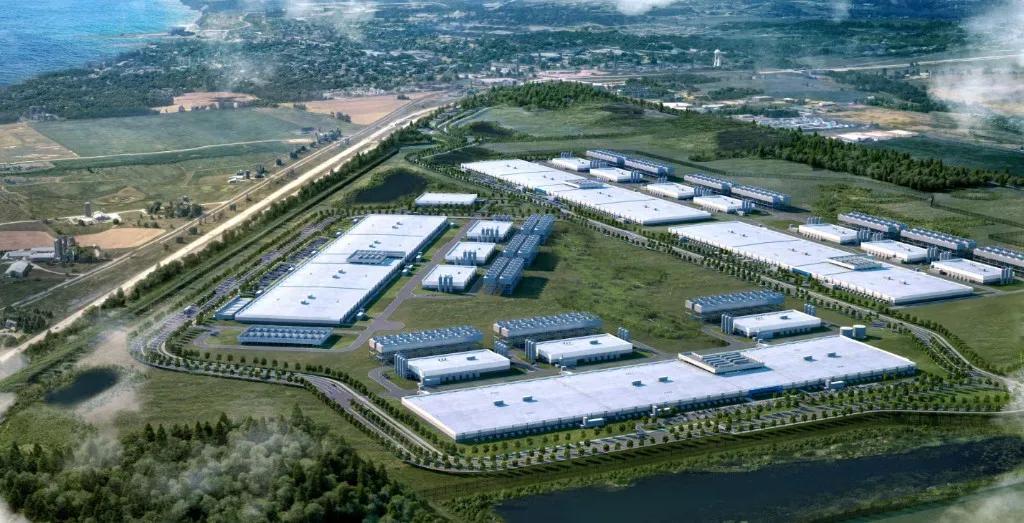
The buildings have been pulled into the same fear. Data centers are described as if they must be loud, thirsty, and tied to dirty gas turbines sitting on the site. They do not have to be any of those things. A project can be placed and designed so the noise is not a burden on the nearest homes. It can take power from the grid, or from new generation the company pays for, instead of burning gas on the property. It can be cooled without treating the town's drinking water as an unlimited supply. Those are choices about how to build. They are not a reason to pause the models inside the building. Officials who fold a bad project into a ban on the technology are answering a construction question with a prohibition.
What sits behind the mood has a domestic part and a foreign one. Voters who have only heard the alarming version are a ready audience. A ban on recursive self-improvement sounds like a specific evil that can be named in a sentence. Rate design, cooling systems, and the difference between a training run and a catastrophe do not survive in that format. Officials reach for the short version because it matches what a misinformed voter already believes. Voters have been misled into thinking that AI is coming for their jobs. Companies hired heavily during the COVID years, and many of them are now finding that they did not need that many people.
China has been trying to reach those same voters. In June 2026, OpenAI reported that it had banned two clusters of ChatGPT accounts likely originating in China. Both were using the model for covert influence operations aimed at American arguments about AI and technology policy. The first, which OpenAI named Data Center Bandwagon, was operated by a private Chinese technology company doing work for provincial government clients. Those accounts posed as Americans and posted comments and images on X claiming that data centers and AI were raising electricity bills for ordinary households. The second cluster produced comments and cartoons that framed US tariffs and American technological competition as an attempt to dominate the field, and OpenAI said its prompts used language associated with China's public security system. OpenAI did not find that the posts spread far past the accounts that published them. The operation was still an outside attempt to make the cost of building AI look like a burden on American families, and to do it while hiding the source. A pause becomes easier to sell when that cost is made to sound like a civilization emergency.
Companies are not waiting on the outcome of that argument. On November 4, 2026, Google said it would spend $15 billion expanding data centers in Malaysia. The spending was already planned, but the announcement still shows the direction of travel. If the United States pauses advanced development and treats the buildings as unacceptable, the campuses will be built where it is easier to get permission. The construction contracts go with them, and so do the lasting jobs of running and maintaining the equipment.
Domestic politics keeps describing a US halt as a way to protect American workers. It does not work that way. Improvements in AI and in the rest of the technology stack will keep changing which jobs exist, whether or not Congress pauses research here. Software built in Malaysia, or in any other country willing to host the infrastructure, still shows up in American offices. What a pause changes is where the new physical work happens. The electricians, equipment operators, facilities technicians, and maintenance contractors are hired where the buildings stand. If the buildings are somewhere else, those jobs are not offered to American workers. The country would keep the disruption from better tools and send the construction elsewhere.
Officials can still demand projects that are quiet, careful with water, and powered without a row of on-site gas turbines. They can ask the companies to pay for the grid upgrades their facilities require. That is an argument about how the United States builds. A pause on advanced AI, and a ban on the research step now being called RSI, is an argument about whether it builds at all. Other countries are already answering yes. If this narrative stays in place after the midterms, American companies will keep preparing to do the work offshore, and the jobs that come with the buildings will be created for someone else.
Sources
Published: Nov 4, 2026 · Evan Sipplen